
Every orthodontic practice in America faces the same question every quarter: where do we put the marketing money? Google Ads. Facebook. TikTok. Instagram. The options multiply, the dashboards proliferate, and the invoices arrive with metrics that nobody in the front office can verify. Meanwhile, two practices I work with have solved the problem by not spending anything on ads at all. They show up first, organically, for a single word. Not a phrase. Not a long-tail qualifier. One word. The hardest real estate in local search.
The broader case for organic first-page placement — the data, the client receipts, and why Google keeps making it harder — is in First Page Placement on Google. This article narrows the lens to orthodontic practices and the channel question that follows once the site earns position one.
One word. Position one.
Quest Orthodontics, led by Dr. Arjun Patel, serves Sandy Springs and Decatur, Georgia. When a parent in the Atlanta metro area types one word into Google, just “Invisalign,” Quest Orthodontics occupies position one in the map pack. Five stars. 865 reviews. No ad spend propping it up.
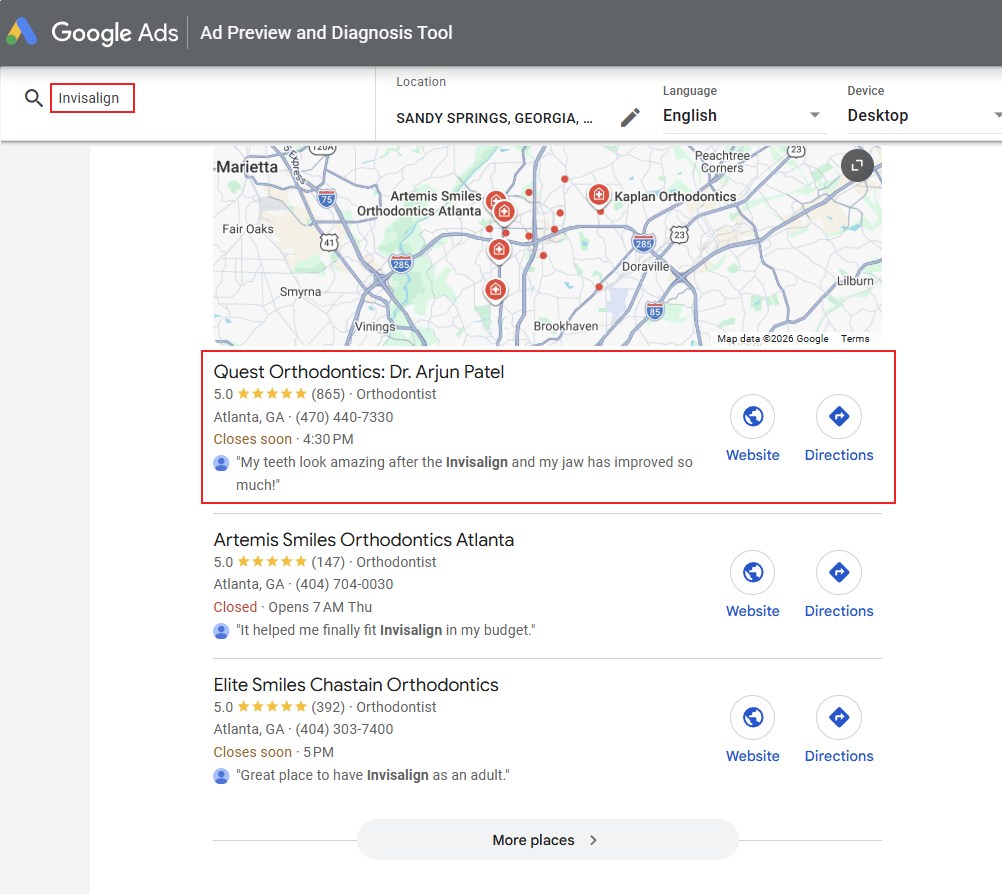 #1
#1 Alpha Smiles Orthodontics, led by Dr. Salem, is in Willowbrook, Illinois, a competitive suburb west of Chicago. When a parent there types one word, just “Braces,” Alpha Smiles holds position one in the map pack. Five stars. 176 reviews. Organic.
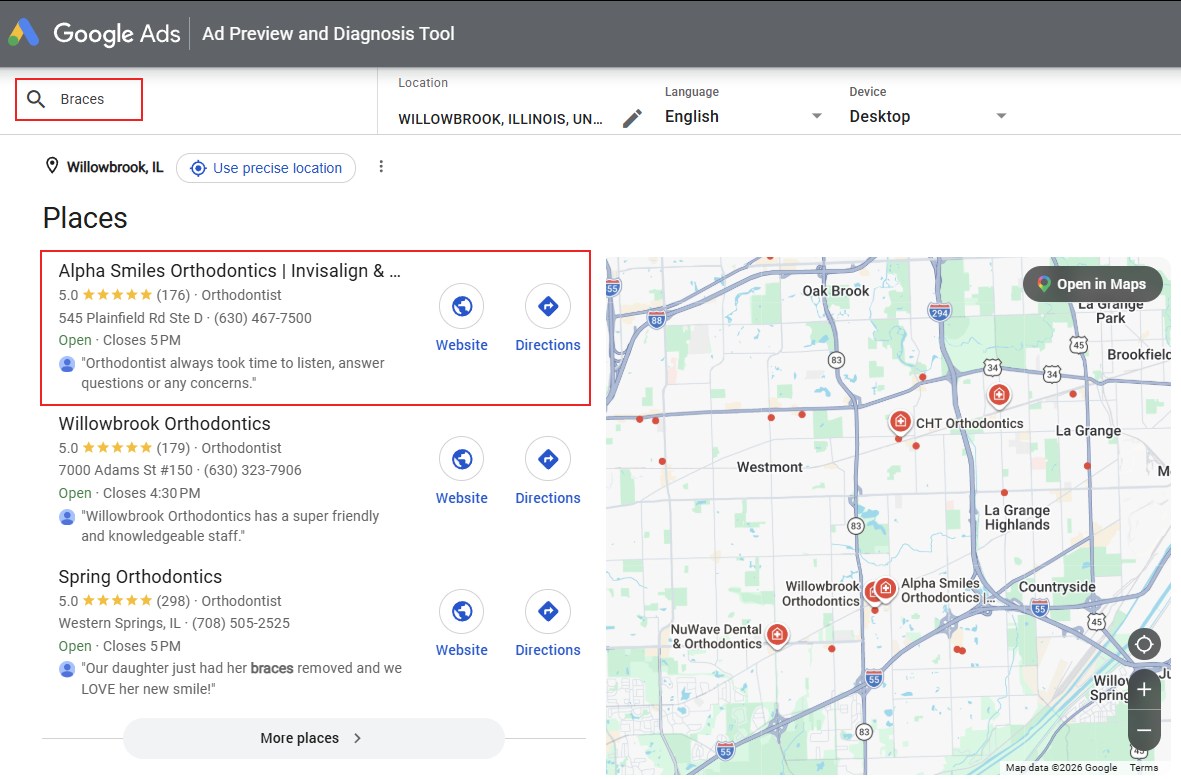 #1
#1 A single-word search is the most competitive real estate in local SEO. Every orthodontist in the radius competes for it. Every corporate chain. Every dental service organization. And these two practices hold position one on the strength of how their sites are built, how their content is written, and how many patients took the time to leave a review. No three-word safety net. No geographic qualifier. Just the word the patient actually types.
If your site is built right, you don’t need a safety net. You show up for the one word the patient actually types.
What Google actually measures: the contentEffort signal
In May 2024, a 2,500-page internal Google document leaked. It contained over 14,000 ranking attributes from Google’s Content Warehouse API. Among them was an attribute called contentEffort. Google has never publicly confirmed it as a ranking factor. They never confirm anything. But the SEO community has mapped it directly to the algorithmic backbone of the Helpful Content System, and it functions as a proxy for the Experience and Expertise pillars of E-E-A-T.
In plain language: Google has a number for how lazy your content is.
Most orthodontic practice websites live on the left side of this comparison. They ship with stock smile photos, template copy that every other practice in the ZIP code also runs, and AI-generated FAQ sections with no local data. They are low-effort pages, and Google scores them accordingly. The practices that rank for single-word searches live on the right side.
Google Content Warehouse API leak, May 2024. Over 14,000 internal ranking attributes confirmed contentEffort as an algorithmic proxy for E-E-A-T. The same black box that won’t tell an advertiser what counts as an impression does publish, accidentally, what counts as effort.
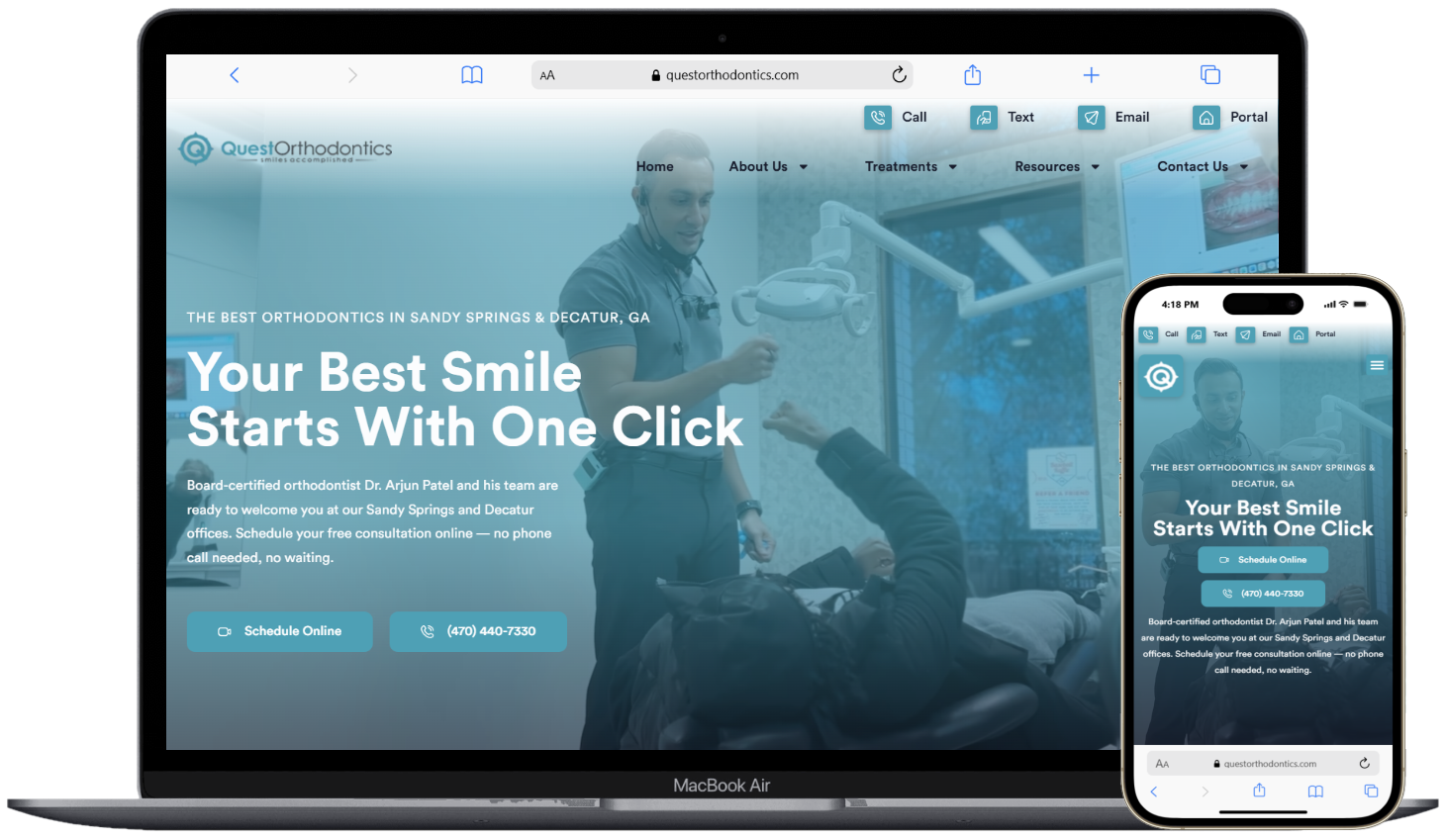
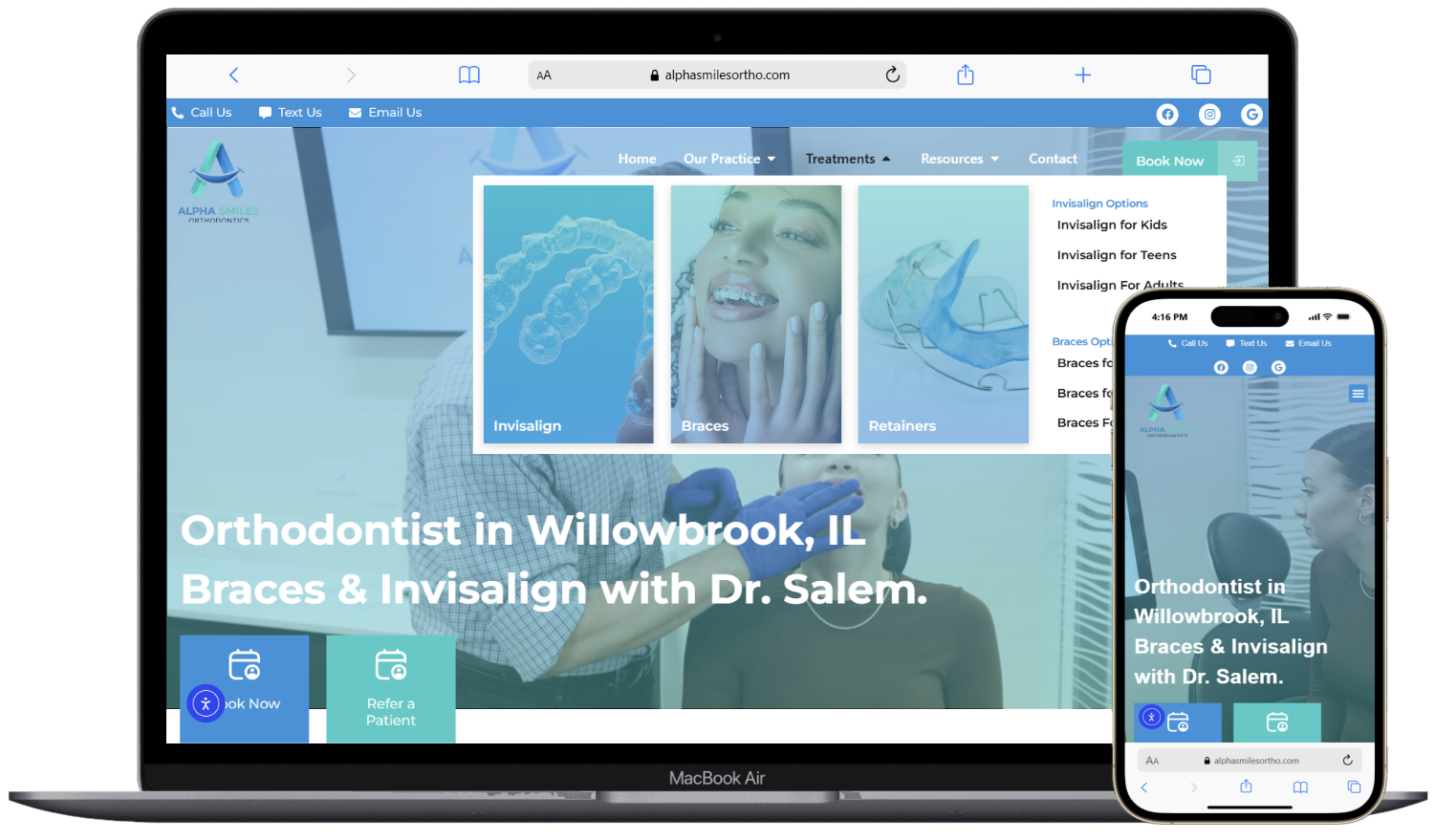
Look at the Quest Orthodontics and Alpha Smiles sites. Real clinical photography. Named doctors. Desktop and mobile parity. Clear calls to action earned by the content above them, not dropped on top of filler. These sites register as high effort because they are high effort. That’s the signal. There is no shortcut.
The impression problem
While these two practices build organic equity that compounds over time, the advertising industry is moving in the opposite direction. OpenAI announced this year that ChatGPT now runs ads. Their latest product update introduces what they call “conversion optimization with impression billing.” Campaigns optimize toward a conversion goal for both ad clicks and ad views, billed on impressions rather than clicks. OpenAI describes it as “our recommended model for maximizing performance.”
Read that carefully. The advertiser pays for delivery. The platform carries none of the click risk.
An impression certifies one thing: the pixel loaded. Not that anyone read it. Not that anyone paused. Not that a human was even in the room. Under the MRC and IAB definition, a display ad counts as “viewable” when 50 percent of its pixels appear on screen for one continuous second. Two seconds for video. That is the bar. Half the ad, for the length of a blink held slightly too long.
Industry research puts 30 to 40 percent of display ads in the “never actually viewed” column because they pass through the viewport faster than the eye can resolve them. A fast thumb clears multiple screens in a single swipe, and the meter still runs. Average dwell time on a digital ad is roughly 1.2 seconds. That’s the window.
In a chat interface the structural problem is worse than on a search results page, because the answer is already sitting above the ad. The user came for the answer, got the answer, and scrolled. This is not a new flaw. It is the oldest flaw in display advertising, ported into the newest surface, roughly a year after that surface opened for business.
The oldest flaw in display advertising, ported into the newest surface.
The black box
Here is what an orthodontic practice owner will never know when running impression-billed campaigns on any platform, Google included:
They will not know what constitutes a loaded pixel. They will not know how the impression was counted. They will not know how the platform attributed a conversion to that impression. And they will not have any independent way to verify the invoice.
Four proprietary steps. One invoice. No independent audit. The definition lives inside the platform’s DMZ, and the practice owner is at the mercy of tracking that is proprietary, opaque, and utterly unverifiable.
And it gets worse. The geographic radius in which a practice appears in local search results is itself a Google output. Google’s algorithm considers how saturated the competition is in any given radius and adjusts the visibility boundary accordingly. A practice in a dense metro area gets a tighter cone. A practice in a rural market gets a wider one. Same practice, same budget, different reach. And that algorithm is unpublished, undocumented, and changes constantly.
The radius isn’t a fixed fact about the practice. It’s a Google output. Even the geography is inside the black box. The only way to observe it is to query from a grid of coordinate points and map where the practice shows up and where it drops off. You’re inferring the fence, not reading it.
Why orthodontics is the wrong fit for awareness billing
Impression-billed advertising assumes a wide funnel and a broad audience. Orthodontics has neither. Consider the structural reality of the business:
An orthodontic practice draws patients from a defined geographic radius, one that Google itself controls. The service is high-ticket, typically several thousand dollars. The decision is high-consideration: parents research, compare, read reviews, and visit multiple offices before committing. And the decision has two stakeholders with different priorities. The parent signs the financial agreement. The teenager has effective veto power over which office they’ll visit for the next 18 to 24 months.
Awareness billing makes sense for a consumer product with a low price point, impulse purchase behavior, and national distribution. None of those conditions exist in orthodontics. An impression-billed campaign thrown into a 15-mile radius is paying for eyeballs that have no intention of buying, no proximity to the practice, and no way to convert from the ad itself.
Organic placement is the opposite. The patient typed the word. They have the intent. The map pack shows the practice that earned the position. The click is free. The conversion starts with trust that was built before the search ever happened.
Which social dial do they turn?
Google captures intent. That argument is settled. But social media manufactures the demand that feeds the search. The question for an orthodontic practice is which social dial you turn to, and what you can expect back from it at a realistic budget.
| Channel | What it does | Orthodontic fit |
|---|---|---|
| Captures existing intent. The patient searched. Google surfaces the practice that earned the position. Map pack placement is the highest-converting real estate in local search. | The primary channel. Organic placement builds compounding equity. But visibility radius is a black box, and paid campaigns carry the impression problem. See First Page Placement on Google. | |
| Manufactures awareness. Targets demographics and interests. Good for event promotion, community presence, and parent-facing messaging. | Useful for open house events, before/after galleries, and financing announcements. Poor for direct patient acquisition. The parent is here; the teen is not. | |
| TikTok | Manufactures demand through short-form video. Algorithm-driven discovery. The teen lives here. | The teenager has veto power. A practice with a strong TikTok presence (braces journey videos, day-of-removal reveals, office culture) reaches the decision-maker the parent can’t override. Organic only. Do not run ads here. |
| Visual portfolio. Before/after cases, office aesthetics, team personality. Reaches both parent and teen demographics. | The visual proof channel. Before/after galleries, Reels of treatment progress, and stories showing office culture. Works as a trust layer that supports the Google conversion. Organic only. |
The answer is not one dial. It’s a sequence. Google captures intent. TikTok and Instagram manufacture demand and build trust with the teen. Facebook maintains community presence with the parent. But Google is the conversion point. It’s where the search happens. It’s where position one matters. And it’s where contentEffort determines whether a practice shows up at all.
Google captures intent. Social manufactures the demand that feeds the search.
The Bojangles precedent
This isn’t limited to orthodontics. Consider what a 5-store Bojangles franchise in the Savannah, Georgia market accomplished with the same organic-first strategy I laid out in First Page Placement on Google. A local franchisee, competing not just against other chicken chains but against its own corporate office, used organic search optimization to outrank the Bojangles corporate website in the local market.
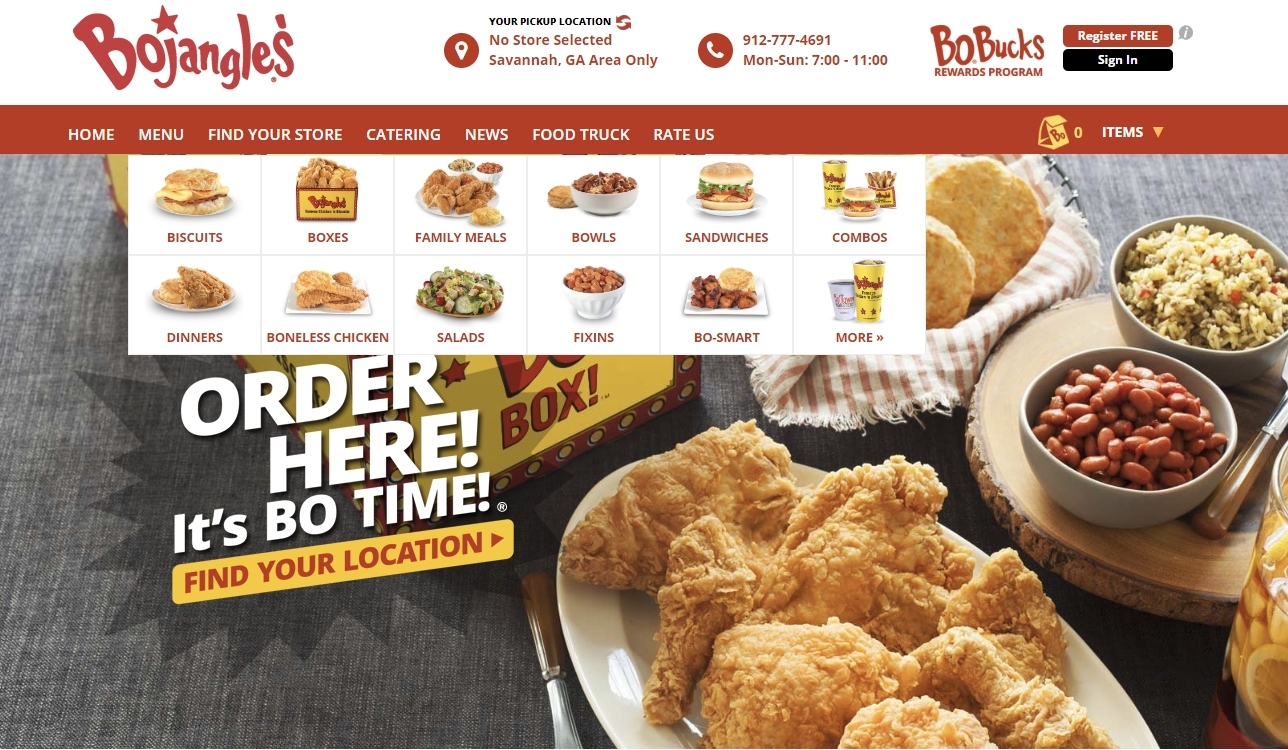
The lesson is structural, not anecdotal. When the site is built right, when the content effort is genuine, when the local signals are authentic, the algorithm rewards the practice or the franchise that did the work. Not the one with the bigger budget. Not the one with the most impressions. The one with the most effort.
An orthodontic practice that builds its site right, earns its reviews, and publishes content worth reading does not need to rent visibility from a black box. The one-word search is the proof. “Invisalign.” “Braces.” Position one. Organic. Verifiable. Free.
Coming next: The Visibility Audit
How to map your practice’s actual visibility radius, identify where Google’s algorithm draws the fence, and build the content effort that moves it. A step-by-step examination framework for orthodontic practices.